
11.17.2026
Located in the historic centre of Madrid, Plaza Mayor is one of the Spanish capital's most famous squares. Surrounded by elegant buildings with arcades and balconies, it has been a central meeting place for residents and visitors for centuries.
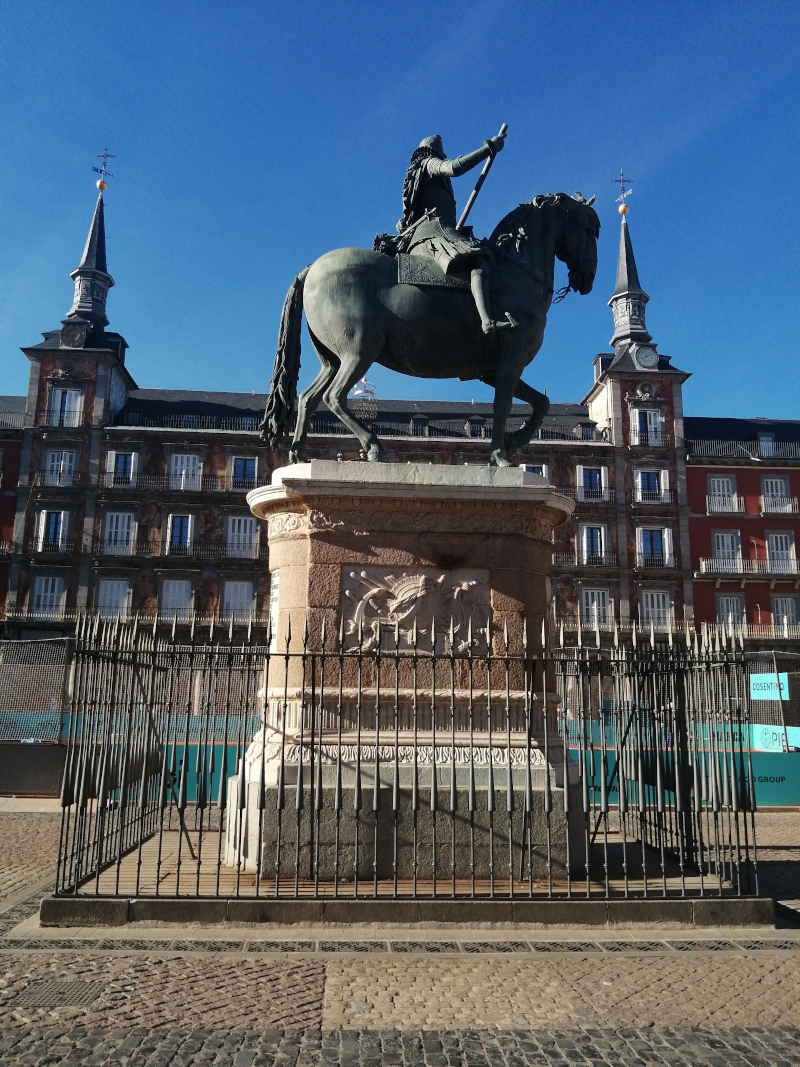
Its history, traditional architecture and lively atmosphere make it an essential stop when exploring the old town. The square is also home to the equestrian statue of King Philip III, one of its most recognisable features.
Plaza Mayor was built during the reign of King Philip III, in the early 17th century, as part of the transformation of Madrid into the capital of the Spanish monarchy. The square was inaugurated in 1620 and became an important setting for public events and celebrations.
Before its construction, the area was known as Plaza del Arrabal and was used as a marketplace outside the medieval town centre. The new square was designed to provide a more organised and monumental space for commercial activity and public gatherings.
Over the centuries, several fires damaged the buildings and led to important reconstruction works. The present appearance of Plaza Mayor is largely the result of the redesign carried out in the 18th century by architect Juan de Villanueva.
The square has a rectangular layout and is surrounded by buildings with uniform façades, balconies and covered arcades. Its architecture creates a distinctive enclosed space, with entrances connecting it to the surrounding streets of Madrid's historic centre.
One of the most notable buildings is the Casa de la Panadería, located on the northern side of the square. Its façade is decorated with paintings and stands out from the other buildings surrounding Plaza Mayor.
Originally used for municipal functions and commercial activities, the building is one of the most recognisable architectural landmarks in the square.
Another important building is the Casa de la Carnicería, situated on the southern side. It was traditionally associated with the supply and sale of meat to the city and forms part of the historic architectural ensemble.
At the centre of Plaza Mayor stands the bronze equestrian statue of King Philip III. It was commissioned in the early 17th century and completed in 1616 by the Italian sculptor Pietro Tacca, based on a design by Giambologna.
The monument was originally placed elsewhere in Madrid before being moved to Plaza Mayor in 1848. Today, it is one of the square's main landmarks and a popular meeting point for visitors.
The Arco de Cuchilleros is one of the most distinctive entrances to Plaza Mayor. Its name comes from the street of the same name, which was historically associated with knife makers and cutlers.
The entrance is notable for its staircase and the difference in street levels between the square and the surrounding neighbourhood. It is also a good starting point for exploring the traditional streets and restaurants nearby.
Walking through the arcades is one of the best ways to appreciate the square's architecture. The covered walkways contain traditional shops, cafés and restaurants, while the open central area offers clear views of the surrounding façades and the statue of Philip III.
Plaza Mayor also hosts seasonal events and public celebrations. During the Christmas period, it is particularly popular for its traditional Christmas market, where visitors can find decorations, nativity figures and festive items.
There are plenty of opportunities to take photographs, enjoy a drink at an outdoor terrace or simply observe the activity of one of Madrid's busiest historic squares.
Plaza Mayor is ideally located for exploring other attractions in the historic centre. A short walk takes you to Puerta del Sol, another of Madrid's best-known meeting points, as well as the traditional streets around the old town.
The Royal Palace of Madrid and Almudena Cathedral are also within walking distance. Their monumental architecture makes them an excellent addition to a visit to Plaza Mayor.
For more information about these places, you can read our guides to the Puerta del Sol and the Royal Palace of Madrid.
Plaza Mayor is a public square and can be visited at any time of day. There is no entrance fee, and its central location makes it easy to include in a walking tour of Madrid's historic centre.
The square is accessible on foot from Puerta del Sol and other nearby attractions. The closest metro station is Sol, which provides connections to different parts of the city.
Early morning is a good time to visit if you prefer a quieter atmosphere and want to take photographs without large crowds. Later in the day, the terraces and arcades become busier with both residents and tourists.
If you are planning your visit or travelling to the Spanish capital, you can check the current time and date in Madrid on our world time page.
Plaza Mayor is one of the most important historic spaces in Madrid. Its architecture, the statue of Philip III and its lively atmosphere make it a worthwhile stop for anyone visiting the city.
Whether you are interested in history, architecture, photography or simply discovering the streets of the old town, this square offers a good starting point for exploring the Spanish capital.
Archive: Travel articles by country › Spain
Discover more places in Madrid:
• Madrid's main tourist attractions
• Royal Palace of Madrid
• Retiro Park
• Puerta del Sol
• Puerta de Alcalá