
8.19.26
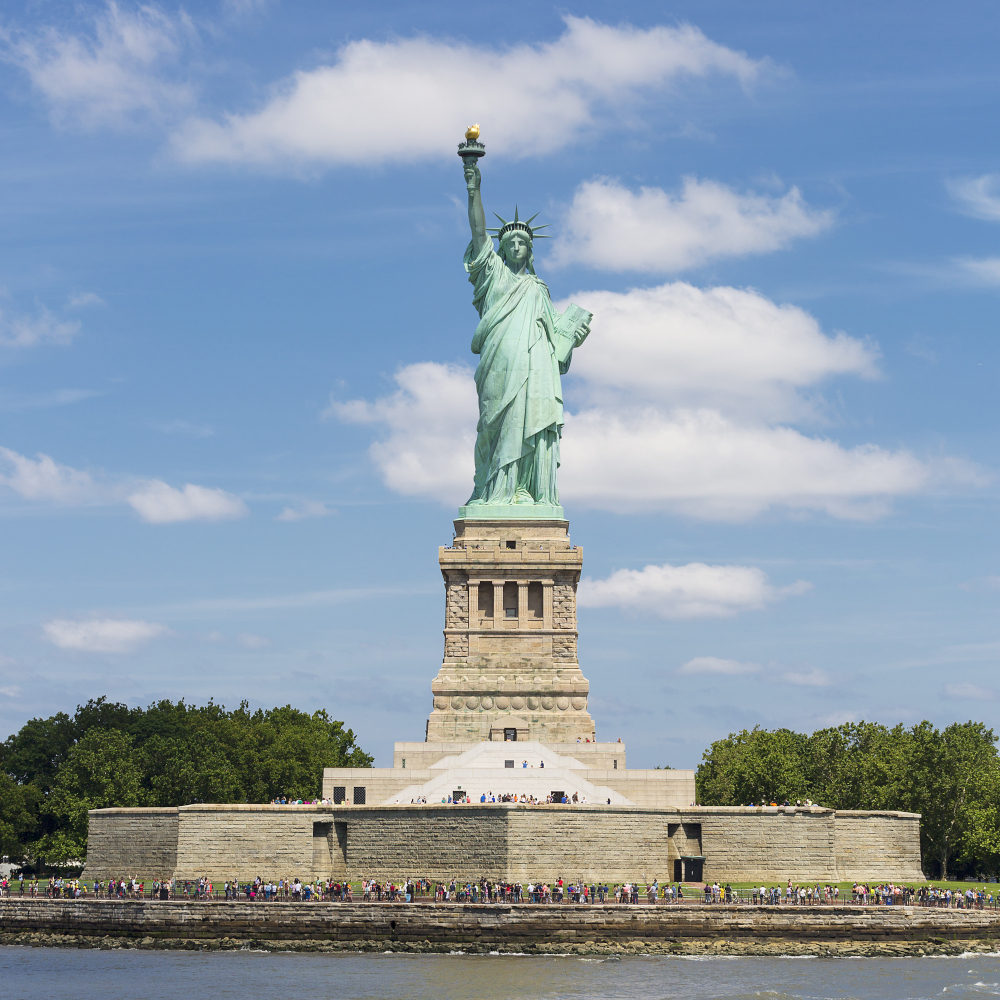
The Statue of Liberty is one of the most recognizable landmarks in the United States and a powerful symbol of freedom. Standing on Liberty Island in New York Harbor, the monument has welcomed visitors and newcomers to New York for more than a century. Its history, remarkable construction and enduring symbolism make it one of the city's most memorable sights.
The Statue of Liberty was a gift from the people of France to the United States and was officially dedicated on October 28, 1886. Designed by French sculptor Frédéric Auguste Bartholdi, the monument was created as a symbol of friendship between the two nations and of the ideals of liberty.
Its location in New York Harbor gave the statue a particularly powerful role. For generations, people arriving in the United States by sea could see Lady Liberty rising above the harbor as they approached New York.
The Statue of Liberty was an extraordinary engineering project for its time. Frédéric Auguste Bartholdi designed the exterior, while the internal supporting structure was developed with the assistance of engineer Gustave Eiffel.
The statue is covered with thin sheets of copper supported by an internal metal framework. This construction method gives the monument both its distinctive appearance and the flexibility needed to withstand wind and changing weather conditions.
The completed statue stands approximately 93 metres (305 feet) from the ground to the tip of the torch, including its pedestal and foundation. Its design incorporates several important symbols, including the torch representing enlightenment, the tablet bearing the date of American independence and the broken chains at the statue's feet.
Throughout its history, the Statue of Liberty has become closely associated with freedom, opportunity and hope. The monument's symbolism has developed over generations and has made Lady Liberty an enduring part of the cultural identity of the United States.
The statue is particularly connected with the history of immigration to the country. Although it was not originally designed specifically as an immigration monument, its position in New York Harbor made it an important visual symbol for many people arriving in the United States.
A visit to the Statue of Liberty offers more than the opportunity to see the monument itself. Liberty Island provides views across New York Harbor and towards the Manhattan skyline, making the journey part of the experience.
Visitors can explore the grounds of Liberty Island and learn more about the history of the monument. Depending on the ticket and access available, it is also possible to visit areas inside the pedestal or climb towards the crown.
The surrounding harbour is particularly impressive from the water. A ferry journey provides different perspectives of Lady Liberty and allows visitors to appreciate the scale of the monument in relation to the city.
The Statue of Liberty has become inseparable from the image of New York City. Along with landmarks such as the Empire State Building, Brooklyn Bridge and Times Square, it is one of the sights most closely associated with the city.
Photographs of the statue can be particularly impressive when viewed from New York Harbor, with the Manhattan skyline in the background. The monument also provides a reminder of the historical relationship between the United States and France.
The Statue of Liberty remains one of the most important landmarks to discover when visiting New York. Its distinctive design, fascinating history and powerful symbolism have allowed it to remain an enduring icon of freedom and one of the most recognizable monuments in the world.
Archive: Travel articles by country › United States
Related links
New York time now
Map of New York
Golden Gate Bridge