
11.16.26
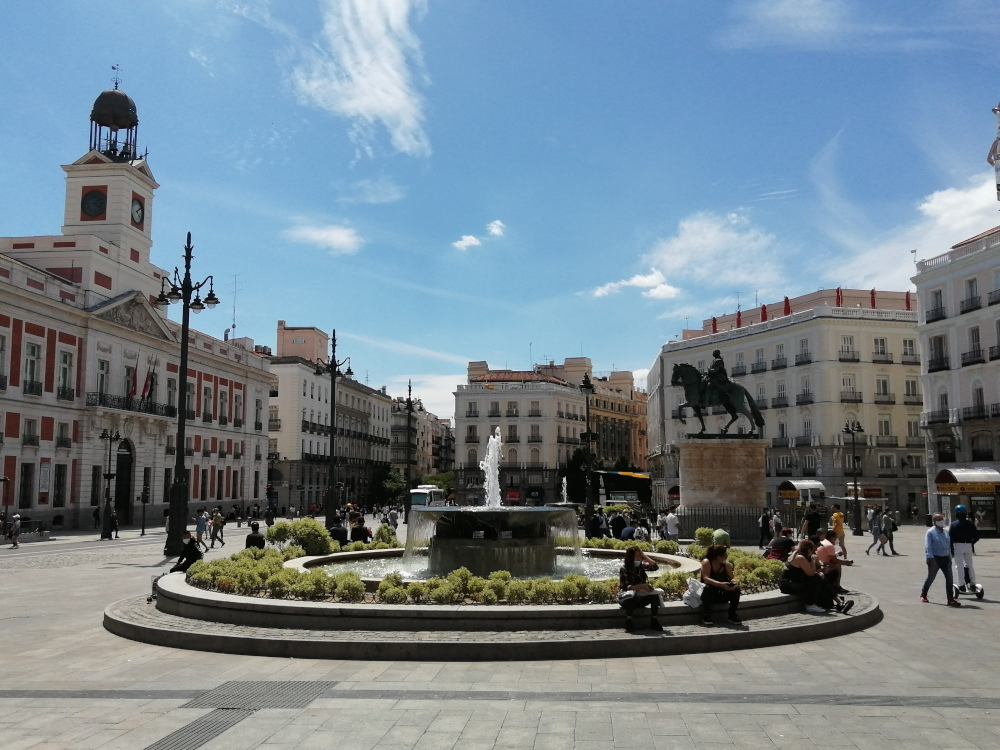
Puerta del Sol is one of the most famous and recognisable places in Madrid. Located in the heart of the Spanish capital, this historic square is a meeting point for residents and visitors and an important starting point for exploring the city centre.
The square is surrounded by historic buildings and busy shopping streets. It is also home to some of Madrid's best-known symbols, including the clock of the Royal Post Office, the Kilometre Zero plaque and the statue of the Bear and the Strawberry Tree.
Puerta del Sol is closely associated with Spanish traditions, particularly the New Year's Eve celebrations, when thousands of people gather to follow the twelve chimes of its famous clock and eat twelve grapes at midnight.
In this guide, we explore the history of the square, its main monuments and the attractions that make it an essential stop during a visit to Madrid.
• History of Puerta del Sol
• The Royal Post Office and Its Clock
• Kilometre Zero
• The Bear and the Strawberry Tree
• Other Monuments and Landmarks
• The Surrounding Area
• Visitor Information
• Madrid Local Time
The origins of Puerta del Sol date back to medieval Madrid. The name of the square comes from a gate in the old city wall, which was decorated with an image of the sun. At that time, the area was located on the eastern edge of the town and served as one of its entrances.
During the following centuries, the area gradually developed into an important urban centre. Streets and buildings grew around it, and the square became a meeting point for merchants, residents and travellers entering the city.
Its importance increased considerably during the 18th and 19th centuries. The construction of the Royal Post Office building in the 1760s and the subsequent urban reforms helped give the square the appearance and significance it has today.
Puerta del Sol has also witnessed important events in Spanish history, including popular uprisings and political demonstrations. Its central location has made it a natural meeting place for public celebrations and gatherings throughout the centuries.
One of the most important buildings in Puerta del Sol is the Real Casa de Correos, also known as the Royal Post Office. Built in the 18th century, it is one of the oldest and most recognisable buildings in the square.
Today, the building serves as the headquarters of the Government of the Community of Madrid. Its most distinctive feature is the clock tower, which has become famous throughout Spain for its role in the New Year's Eve celebrations.
Every year on 31 December, millions of people watch the clock's twelve chimes on television as they eat twelve grapes, one with each chime, to welcome the New Year. The tradition has become one of the most popular celebrations in Spain.
The clock and its tower are among the defining symbols of Puerta del Sol. Even outside the festive season, the building is an important landmark and a popular place for photographs.
Another of the square's most famous features is the Kilometre Zero plaque, located on the pavement in front of the main entrance to the Royal Post Office.
This small stone marker indicates the reference point from which the distances of Spain's main radial roads are traditionally measured. It is a symbolic centre of the country's road network and one of the most photographed details in the square.
Many visitors stop to take a photograph beside the plaque as a souvenir of their trip to Madrid. Although it is a relatively small feature, its location and meaning make it one of the most popular attractions in Puerta del Sol.
The statue of the Bear and the Strawberry Tree, known in Spanish as El Oso y el Madroño, is one of the most recognisable symbols of Madrid.
The bronze sculpture represents the bear standing beside a strawberry tree, an image associated with the city's historic coat of arms. It was created by sculptor Antonio Navarro Santafé and unveiled in 1967.
The statue is located near the beginning of Calle de Alcalá and has become one of the most popular meeting points in the capital. Visitors often stop here to take photographs, while local residents use it as a familiar place to meet friends.
Its importance goes beyond its artistic value, as the bear and the strawberry tree are closely linked to the identity and history of Madrid.
In addition to the famous clock and the Bear and the Strawberry Tree, Puerta del Sol contains other interesting monuments and architectural details.
One of the most prominent is the equestrian statue of King Charles III, located in the central area of the square. The monarch ruled Spain during the 18th century and is remembered for the reforms and urban improvements carried out in Madrid during his reign.
Another notable sculpture is La Mariblanca, a replica of a 17th-century statue that originally formed part of a fountain in the square. It recalls an earlier period in the history of Puerta del Sol and its public fountains.
Visitors can also see the famous Tío Pepe illuminated sign, which has become a familiar feature of the square's skyline. Together, these monuments and details give Puerta del Sol much of its distinctive character.
Puerta del Sol is an excellent starting point for exploring the historic centre of Madrid. Several important streets meet in the square, including Calle Mayor, Calle del Arenal, Calle de Alcalá and Calle de Preciados.
Calle de Preciados is one of the city's best-known shopping streets, with department stores, fashion shops and other commercial establishments. It connects the square with the area around Callao and Gran Vía.
Walking along Calle Mayor takes visitors towards Plaza Mayor, one of Madrid's most historic squares. Its arcades, traditional architecture and lively atmosphere make it another essential stop in the city centre.
In the opposite direction, Calle del Arenal leads towards the Teatro Real and the Royal Palace area. This route is particularly interesting for visitors who want to discover Madrid's historic architecture.
Puerta del Sol is also within walking distance of several museums, traditional streets and other important attractions. Its central location makes it easy to include in almost any sightseeing itinerary around Madrid.
Puerta del Sol is a public square and can be visited free of charge at any time. It is a pedestrian area, making it easy to explore on foot and enjoy its monuments and surrounding streets.
The square is usually busy throughout the day, particularly during weekends, public holidays and the main tourist season. Early morning can be a good time to take photographs with fewer people around, while the afternoon and evening offer a livelier atmosphere.
The square is very well connected by public transport. Sol Metro station serves Lines 1, 2 and 3, and the same station also provides access to the Cercanías local train network.
Because of its central location, many visitors combine a walk around Puerta del Sol with a visit to Plaza Mayor, Gran Vía and the Royal Palace area.
If you are planning a visit to Puerta del Sol, it may also be useful to check the local time in the Spanish capital before travelling. Madrid follows the time zone used in mainland Spain, with seasonal clock changes during the year.
You can find the current local time and date in Madrid, together with information about the city's time zone.
Puerta del Sol is one of the essential places to visit in Madrid, but the city has many other historic landmarks, museums, parks and interesting neighbourhoods to discover.
If you are planning a trip to the Spanish capital, take a look at our complete guide to what to see in Madrid, where you can find more information about the city's main attractions.
Among the places worth including in your itinerary are the Royal Palace of Madrid and Retiro Park, two very different places that offer an insight into the history, architecture and atmosphere of the capital.
Exploring the streets around Puerta del Sol is also a good way to discover traditional Madrid, with its historic squares, shops, cafés and lively pedestrian areas.
Archive: Travel articles by country › Spain
Related links
What to See in Madrid, Spain: Top Attractions and Historic Landmarks
Royal Palace of Madrid
Retiro Park in Madrid
Current local time in Madrid